Ecommerce has become increasingly visual. Customers no longer rely only on product images and descriptions when making purchase decisions. They want to see products in action, understand their features, and visualize how they fit into their daily lives.
This shift has made product videos one of the most important assets for online brands. A well-made video can demonstrate product benefits, answer customer questions, and create a stronger connection than static images alone.
However, producing high-quality ecommerce videos at scale has traditionally required professional shoots, models, locations, editing teams, and significant production time. For brands launching multiple products or running frequent campaigns, creating enough video content can become difficult.
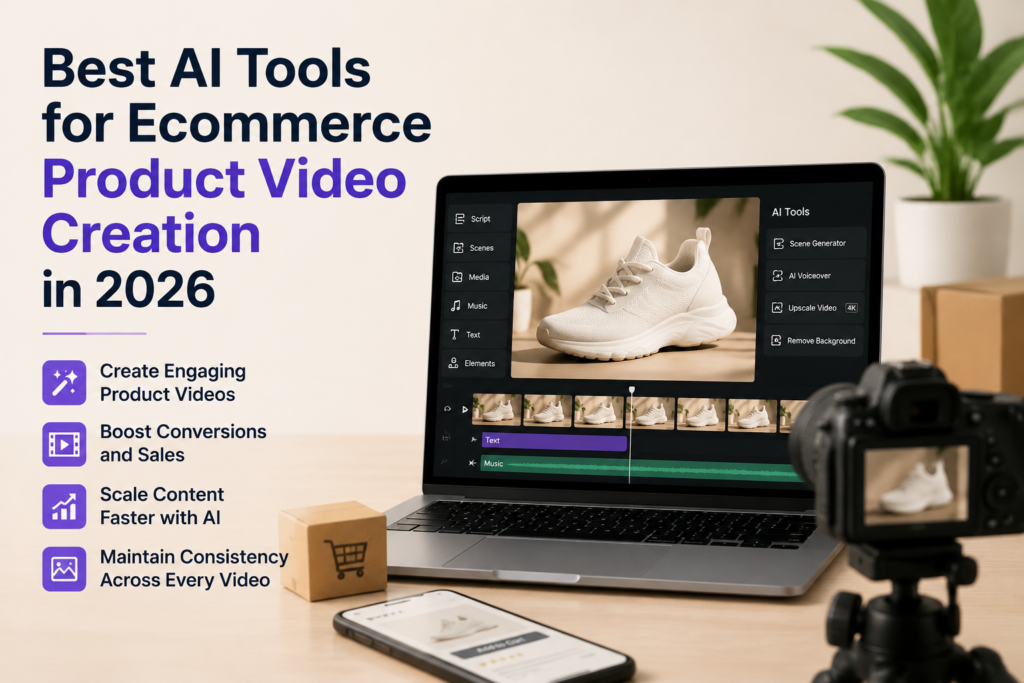
AI video tools are changing this process by helping ecommerce teams create product videos faster and more efficiently. These tools can support different stages of production, from generating concepts and product visuals to creating advertisements, demonstrations, and social media content.
The best AI tools for ecommerce product video creation do more than generate visuals. They help brands maintain product accuracy, create different campaign formats, and scale video production while keeping the product presentation consistent.
Here are some of the best AI tools helping ecommerce brands create product videos in 2026.
1. Invideo Agent
Invideo Agent helps ecommerce brands turn product ideas, creative briefs, and references into complete video projects. Instead of creating individual clips separately, it supports a connected workflow where teams can develop concepts, plan scenes, generate visuals, edit videos, and refine the final output.
For ecommerce brands, this is useful because product campaigns often require multiple videos, including product demonstrations, social advertisements, website videos, and short-form content. Each video needs to maintain the same product appearance, brand style, and messaging.
Invideo Agent helps creators build product-focused videos while keeping the creative direction consistent across different scenes. This makes it useful for campaigns where a product needs to appear in multiple environments, camera angles, and formats without losing its identity. It can also support workflows where existing product footage needs refinement, including improving video quality and preparing assets for different marketing channels through AI-powered enhancement and upscaling workflows.
With invideo Agent Two, larger ecommerce campaigns can benefit from a more advanced creative workflow that helps teams coordinate elements such as visual planning, storytelling, cinematography, and effects. This allows brands to manage larger product video projects while maintaining consistency across multiple assets.
2. Runway
Runway is an AI video creation platform that helps creators generate and edit videos using advanced AI models. It is widely used by filmmakers, marketers, and creative teams for developing unique visuals and experimenting with different video styles.
For ecommerce brands, Runway can help create visually engaging product content by generating creative environments, lifestyle scenes, and promotional visuals. A brand can explore different ways of presenting a product before finalizing a campaign direction.
It can be especially useful for premium product videos where brands want a more cinematic look. However, maintaining exact product details across multiple scenes may require careful reference management and additional creative control.
3. HeyGen
HeyGen is an AI video platform focused on creating videos with digital avatars and AI presenters. It allows businesses to produce presenter-led content without requiring traditional recording setups.
For ecommerce brands, HeyGen can be useful for creating product explainers, customer education videos, and spokesperson-style advertisements. A consistent digital presenter can introduce products, explain features, and create localized versions for different markets.
The platform is particularly valuable for brands that need frequent communication-style videos. However, it is more focused on presenter-based content rather than cinematic product storytelling or complex visual campaigns.
4. Creatify
Creatify is an AI video advertising platform designed around ecommerce and performance marketing. It helps brands transform product information into advertisement-style videos that can be used across paid campaigns.
For ecommerce businesses, Creatify can help create multiple versions of product advertisements by experimenting with different hooks, messages, and formats. This is useful for marketers who need to test different creative approaches.
The platform works well for brands focused on scaling advertising output quickly. However, brands looking for deeper storytelling, detailed product worlds, or complex multi-scene productions may need more advanced creative workflows.
5. Kling AI
Kling AI is a generative video platform focused on creating realistic AI-generated videos from text and image inputs. It is known for producing detailed motion and visually rich scenes.
For ecommerce product videos, Kling AI can help brands create cinematic product visuals, lifestyle scenes, and creative advertisements. It can be useful when brands want to showcase products in visually impressive environments without traditional production setups.
Its realistic motion capabilities make it suitable for concept development and creative campaigns. However, maintaining complete product consistency across longer campaigns may require strong references and additional workflow management.
6. Canva AI Video Tools
Canva is a popular design platform that includes AI-powered features for creating marketing content, including product videos and promotional assets.
For ecommerce brands, Canva is useful for quickly creating social media videos, product announcements, promotional clips, and branded content. Its templates and design tools make it accessible for marketing teams that need to produce content regularly.
It works especially well for smaller businesses that need simple and effective product videos without complex production requirements. However, it may not provide the same level of control for advanced cinematic product storytelling or multi-scene AI productions.
Why AI Is Changing Ecommerce Product Video Creation
AI is making product video creation more accessible by reducing many traditional production barriers. Brands no longer need a complete production setup for every campaign. Instead, they can explore ideas, create variations, and produce marketing assets faster.
For ecommerce teams, this means they can create videos for different customer journeys. A product launch may include a detailed website video, short social advertisements, feature demonstrations, and UGC-style content.
AI helps brands adapt one product idea into multiple formats while maintaining a consistent message.
Maintaining Product Consistency Across AI-Generated Videos
One of the biggest challenges in AI-generated ecommerce videos is ensuring that the product looks the same throughout the campaign.
A product shown in a hero shot should match the same product shown in a lifestyle scene or demonstration video. Packaging, colors, materials, and design details should remain consistent.
This is especially important for ecommerce because customers use videos to understand the actual product before purchasing.
AI workflows that support references, connected projects, and creative continuity help brands reduce inconsistencies and create more reliable product videos.
Creating Different Types of Ecommerce Product Videos With AI
Modern ecommerce brands need more than one type of product video.
AI tools can help create:
Product demonstration videos that explain features and usage
Lifestyle videos that show products in real-world situations
Short-form social media videos for platforms like Instagram and TikTok
Advertisement variations for paid campaigns
Product launch videos for new releases
By creating multiple formats from the same product concept, brands can reach customers across different channels.
How AI Helps Brands Scale Product Video Production
The biggest advantage of AI video tools is scalability.
A brand launching several products may need dozens of videos across websites, marketplaces, advertisements, and social platforms. Traditional production methods can make this expensive and time-consuming.
AI workflows allow teams to create more content while maintaining consistent branding and product presentation.
This helps ecommerce businesses test different creative approaches, update campaigns faster, and respond more quickly to changing customer preferences.
How to Choose the Right AI Tool for Ecommerce Product Videos
The right AI video tool depends on the type of content a brand wants to create.
Brands focused on quick social advertisements may prefer tools designed for fast content creation, while companies building larger campaigns may need platforms that support complete production workflows.
Important factors to consider include:
Product consistency
Video quality
Editing flexibility
Ability to create multiple formats
Support for larger campaigns
For brands producing regular product videos, a workflow-based approach can be more valuable than a tool focused only on generating individual clips.
Final Thoughts
AI tools are changing how ecommerce brands approach product video creation. They help businesses produce engaging videos faster while reducing the limitations of traditional production.
From product demonstrations and advertisements to social content and campaign videos, AI makes it easier to create more assets without losing quality or consistency.
The future of ecommerce video will not only depend on generating attractive visuals. It will depend on creating accurate, scalable, and connected video workflows that help brands communicate their products more effectively.
About The Author