Before a film enters production, directors and creative teams need to make hundreds of decisions about how the final story will look on screen.
A script may describe a scene, but it does not show the exact camera movement, character positioning, lighting, environment, or visual style. Filmmakers need a way to explore these elements before spending time and resources on production.
This is where previsualization, commonly called previs, plays an important role.
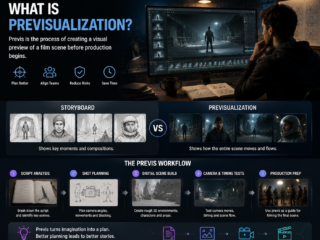
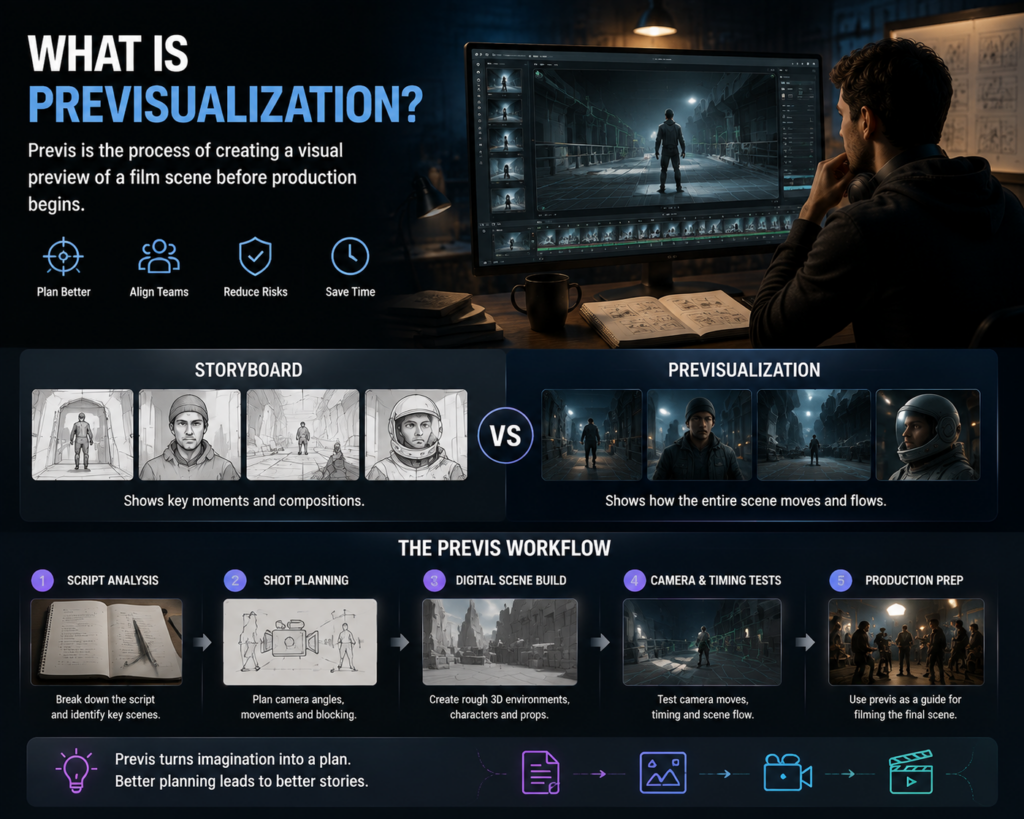
Previsualization is the process of creating a visual preview of a film sequence before actual production begins. It allows directors, cinematographers, and production teams to test creative ideas, plan shots, and understand how scenes will work before filming.
Originally used mainly for large-scale productions involving complex action sequences and visual effects, previs is now becoming more accessible through AI-powered tools. Independent filmmakers, brands, and creative teams can use AI previs workflows to plan scenes, explore visual directions, and make stronger production decisions earlier.
What Is Previsualization in Filmmaking?
Previsualization is a planning technique where filmmakers create a rough visual representation of a scene before shooting.
Unlike a traditional storyboard, which usually shows selected frames, previs focuses on how an entire sequence will unfold. It can show camera movement, timing, character blocking, environments, and the relationship between different elements within a scene.
A previs sequence may include:
The purpose of previsualization is not to create the final film. Instead, it helps filmmakers understand the structure of a scene and make creative decisions before production begins.
For example, a director planning a complex action scene can use previs to test where the camera should move, how characters should interact, and how different shots connect together.
Why Do Filmmakers Use Previsualization?
Filmmaking involves many creative and technical decisions. A small change in one area can affect the entire production.
A camera angle may impact lighting requirements. A location decision may affect character movement. A visual effect may require changes in shooting techniques.
Previsualization helps filmmakers identify these challenges early.
Some key benefits include:
Better Creative Planning
Previs allows directors to experiment with different approaches before committing to a final version.
A filmmaker can test multiple camera angles, scene layouts, and visual styles to determine what best supports the story.
Improved Communication Between Teams
A written description can sometimes be interpreted differently by different departments.
A visual preview gives everyone a clearer understanding of the director’s vision. Cinematographers, VFX teams, designers, and producers can work from the same reference.
Reduced Production Risks
Complex scenes can involve high costs. Previs helps teams identify problems before filming begins, reducing the need for expensive changes later.
For example, a director planning a large environment scene can understand camera placement and production requirements before building sets or arranging locations.
Difference Between Storyboards and Previsualization
Storyboards and previs are closely related, but they serve different purposes.
A storyboard is a collection of important frames that show key moments in a scene. It focuses on composition, framing, and storytelling beats.
Previsualization goes further by showing how the sequence moves over time.
The difference can be explained simply:
Storyboards show what the audience sees.
Previsualization shows how the entire scene works.
For example, a storyboard may show a character entering a room, looking around, and discovering something important.
A previs sequence can show how the camera follows the character into the room, where the character moves, how long the moment lasts, and how the scene transitions into the next shot.
Both tools are valuable, and many filmmakers use them together during pre-production.
How Previsualization Works in Film Production
Traditional previs workflows often involve 3D artists creating digital versions of environments, characters, and cameras.
The process usually includes several stages:
Script Analysis
The team studies the script to identify important scenes, locations, characters, and technical requirements.
Shot Planning
Directors and cinematographers decide how scenes should be captured, including camera positions, movements, and framing.
Digital Scene Creation
Artists create rough digital versions of environments and characters to represent the planned sequence.
Camera and Movement Testing
The team experiments with camera angles, timing, and movement to understand how the final scene may look.
Production Preparation
The completed previs becomes a reference for the production team during filming.
AI is now helping simplify many of these steps by allowing creators to move faster from ideas and references to visual concepts.
How AI Is Changing Previsualization
AI is making previs workflows faster and more accessible by helping filmmakers generate visual ideas, explore scenes, and test creative decisions earlier.
Instead of manually creating every visual element from scratch, creators can use AI tools to develop:
AI-assisted previs allows filmmakers to explore more possibilities before selecting a final direction.
For independent creators, this means they can experiment with production ideas without requiring the same resources as traditional studio workflows.
AI Previsualization for Directors and Filmmakers
For directors, previs is valuable because it creates a bridge between imagination and production.
A director may have a clear idea of a scene internally, but communicating that vision to an entire team can be challenging.
AI-powered previsualization helps turn creative ideas into visual references that teams can understand.
For example, a director creating a science-fiction film can explore futuristic environments, camera movements, and scene compositions before deciding how the final production should be approached.
This allows directors to make creative decisions with more confidence.
The Role of AI Agents in Previsualization Workflows
Modern filmmaking involves many connected stages. A creative decision made during script development can influence scene planning, visual style, character consistency, and final editing.
AI agents are helping connect these different parts of the workflow.
Invideo Agent supports filmmakers by helping them move from ideas, scripts, and references into structured video projects. It can help creators plan scenes, develop visuals, generate content, and refine outputs while keeping creative decisions connected throughout the workflow.
For previsualization, this type of workflow is useful because filmmakers can explore how written concepts translate into visual sequences before final production.
With invideo Agent Two, larger projects can benefit from improved coordination across areas such as story development, cinematography, visual planning, and effects. This helps teams manage complex productions where multiple creative elements need to stay aligned.
Where Previsualization Is Commonly Used
Previsualization is used across different types of visual storytelling, including:
Films and TV Series
Directors use previs to plan complex scenes, camera movements, and visual sequences before shooting.
Commercials
Brands use previs to plan product shots, camera movements, and advertising concepts before production.
VFX-Heavy Projects
Previs helps teams understand how digital effects, environments, and live-action footage will work together.
Virtual Production
Previs plays an important role in planning digital environments and camera setups used in virtual production workflows.
Challenges of Traditional Previsualization
Although previs provides many advantages, traditional workflows can require significant time and resources.
Creating detailed 3D previs often involves specialized artists, software, and production teams.
For smaller creators, this can make detailed previs difficult to access.
AI-powered workflows are helping reduce these barriers by allowing creators to explore visual ideas faster and with fewer resources.
The Future of Previsualization in Filmmaking
As AI technology improves, previsualization will become an even more important part of filmmaking.
Future workflows will likely allow directors to move from scripts to detailed visual plans faster, combining story development, shot planning, environment creation, and production preparation into connected systems.
This will not replace the creative role of filmmakers. Instead, it will give directors more ways to experiment, communicate ideas, and make better decisions before production begins.
Final Thoughts
Previsualization helps filmmakers transform ideas into visual plans before cameras start rolling. It allows directors to test creative choices, improve communication, and reduce production challenges.
With AI-powered tools and workflows, previs is becoming more accessible to filmmakers of all levels.
From blockbuster films and VFX projects to independent productions and brand videos, previsualization is becoming an essential step in creating better visual stories.
About The Author